
Search Harnett County Court Records Online
The main online access point for Harnett County court records is the North Carolina eCourts Portal. Harnett is an eCourts county, so the county does not run a separate local case database for Superior Court and District Court files. Portal is statewide, which means Harnett County must be selected in the location filter before name, record-number, citation-number, attorney, or business searches are reviewed. The Harnett Clerk's Portal explainer also notes that public users can use Smart Search, Search Hearings, document viewing, and payment tools through the statewide system.
Portal is the first stop, not the only stop. If a Harnett County court record is older, sealed, not digitized, or missing a document image, the fallback is the Clerk of Superior Court. North Carolina court records guidance says court files can be viewed at the clerk's office in the county where the case is located, and civil, special proceeding, and estate case information can also be accessed on public terminals. Harnett criminal name checks may be searched at the public terminal for inquiry only at no charge, while a certified Harnett criminal record check carries the statutory fee listed by the Clerk.
- Open Portal and choose Smart Search for case records, Search Hearings for court dates, Make Payments for eligible balances, or NC Judgment Search for judgment index work.
- Use Advanced Filtering Options and set the location to Harnett County before reviewing matches.
- Search by record number, party name in last, first middle suffix format, business name, citation number, attorney name, or attorney bar number.
- Use wildcard rules when spelling is uncertain, but avoid over-filtering by date or case status if the case does not appear.
- Contact the Clerk of Superior Court when Portal lacks the full document, a certified copy is needed, or the record may be restricted.
The NC Judicial Branch court records topic hub is the statewide reference for records, background checks, and expunctions. For filing rather than searching, Harnett's eCourts materials point attorneys and supported self-represented filers to File & Serve. Filing access and public record access are related, but they are not the same thing.
Harnett County Court Records Search Fields
Portal Smart Search is strongest when the search starts broad and then narrows. A person with a full case number can enter it directly. A name search should use the portal's last, first middle suffix format, and a business search should use the business-name option. Portal's static field page also documents wildcard rules, including a minimum of three last-name characters followed by an asterisk for a last-name wildcard and at least four characters for a wildcard business or case-number search.
| Field Label | Type | Required | Notes / Format |
|---|---|---|---|
| Record Number or Name | Text | Yes, one search field required | Use record number or party name in last, first middle suffix format. |
| Last Name / First Name | Text | Yes for name search | Wildcard last names need three characters plus asterisk; first names need one character plus asterisk. |
| Filter by Location | Dropdown | No, but important | Select Harnett County to avoid statewide results. |
| Search by | Option | No | Party Name, Nickname, Business Name, or Sounds Like. |
| Case Type / Case Status | Dropdown | No | Useful after broad results appear; exact values depend on Portal. |
| File Date Start / End | Date | No | Helpful when the approximate filing date is known. |
The Harnett Clerk's eCourts page identifies Portal, File & Serve, Guide & File, and Odyssey as parts of the statewide platform. Portal requires JavaScript, cookies, a supported browser, and periodic CAPTCHA checks. It also notes that elevated access is limited to users with verified business need and statutory authority, so the public view may not show every document in a case.
Harnett's eFile and Serve page is useful when a person is filing into a case rather than just reading a case. It describes electronic filing, file-stamped copies, fee payment, and status updates. Public users should still treat Portal search results as access to case information, not as a certified copy or proof that no restricted record exists.
Types of Harnett County Court Records
Harnett County court records come from the North Carolina General Court of Justice trial division. Superior Court handles felony criminal matters, civil cases over the District Court amount range, and appeals from District Court. District Court handles misdemeanors, infractions, many traffic matters, domestic cases, juvenile matters, small claims, magistrate matters, and lower-dollar civil disputes. These divisions share the statewide records system, but the division and case type matter when reading a record.
The North Carolina courts hierarchy page explains the statewide structure. Harnett County is listed by the Judicial Branch as Prosecutorial District 12, Superior Court District 12, and District Court District 12. The Clerk of Superior Court keeps civil, criminal, estates, special proceedings, and foreclosure records, while the Harnett Register of Deeds keeps marriage, vital, and land records outside the court case file system.
- Civil records can include complaints, summonses, answers, motions, orders, judgments, service returns, and post-judgment filings.
- Criminal records can include filed charges, warrants returned to court, indictments, pleas, dispositions, judgments, and sentencing entries.
- Family records can include divorce, custody, support, and protective-order cases, though sensitive details may be restricted.
- Probate and special proceedings are handled by the Clerk of Superior Court acting as probate judge, with estates information available through Portal or clerk terminals when public.
- Traffic records are court records when a citation becomes a court case, but they are separate from NCDMV driver records.
The Harnett Clerk of Superior Court is the local office for trial-court filings and copies. Real estate instruments, marriage licenses, marriage certificates, birth and death records, military discharges, notary oaths, and assumed business names are handled by the Harnett County Register of Deeds, not by the Clerk.
What Harnett County Court Records Show
A public Harnett County court record usually shows the information needed to identify the case, place it in the right court division, and track what happened. Portal and public calendars can show case numbers, parties, locations, hearing dates, courtroom numbers, attorneys, charges or claims, and disposition fields. A calendar record is not the full file. It is a schedule or docket snapshot, while the case file can include filings, orders, judgments, and documents that may require clerk access or fees.
| Field | What It Shows |
|---|---|
| Case or record number | The court's identifier, such as the file number used in Portal, calendars, and clerk records. |
| Location and division | Harnett County, Lillington, and whether the case is in Superior Court or District Court. |
| Parties | Names of plaintiffs, defendants, petitioners, respondents, or criminal defendants. |
| Hearing date and courtroom | The date, time, and courtroom shown through Search Hearings or calendar records. |
| Charge or cause | The offense, claim, petition type, judgment matter, or other reason the case exists. |
| Plea, verdict, or disposition | The result of a charge or case event, when public and entered. |
| Documents | Orders, filings, and other images when available to the public; restricted documents may be hidden. |
The sample Harnett criminal disposition calendar in the research shows practical docket fields such as judge presiding, courtroom clerk, prosecutor, defendant name, offense, complainant or officer, file number, plea, verdict, class, and judgment. Public calendars do not show Social Security numbers, full financial account data, protected juvenile information, or similar private data.
Public Access to Harnett County Court Records
North Carolina public access starts with the rule that public records and public information held by public agencies are generally available unless a law restricts them. For Harnett County court records, the practical access chain is Portal, public terminals, clerk viewing, and copy requests. For law-enforcement investigative files, the rule is different. A sheriff's investigative record may be restricted even when a returned warrant, criminal summons, indictment, or filed court charge is public.
Key Statutes:
G.S. 132-1 treats North Carolina public records as the people's property unless another law limits access.
G.S. 132-1.4 gives criminal investigation records special limits while listing certain returned warrants and filed criminal process as public court records unless sealed.
G.S. 7A-109(b)(6) is referenced by Portal's NC Judgment Search for judgment index access.
Copy access is more formal than online viewing. The Clerk of Superior Court can provide copies for a fee, and certified criminal record checks cost $25 under the Harnett Clerk information captured in the research. Court costs vary by case type, so the statewide Current Court Costs charts are the official place to check current fee categories.
Restricted Harnett County Court Records
Not every Harnett County court record is public in full. Juvenile delinquency, abuse, neglect, dependency, adoption, some mental health matters, sealed cases, expunged criminal matters, and records with protected personal information have access limits. Portal may show only public fields, may hide documents, or may show no public record at all when a record is sealed or restricted. Elevated access is not general public access; it is reserved for users with a verified statutory basis.
Expunction is also different from a normal sealed case. The NC Judicial Branch expunction help topic explains the effect and limits of expunction, while G.S. 15A-145.5 covers certain nonviolent misdemeanor and felony conviction expunctions. Juvenile confidentiality comes from Chapter 7B. A person seeking access to a restricted file should contact the Clerk or use the proper court procedure rather than relying on a public portal search.
Note: A missing Portal result does not prove that no Harnett County court record exists or that no restricted file is held by the Clerk.
Harnett County Court Record Requests
When online access is not enough, the local route is the Clerk of Superior Court at the Harnett County Courthouse. The NC Judicial Branch courthouse page gives the courthouse address and main number, and the Harnett contact directory breaks out civil, criminal, estates, juvenile, magistrate, and District Attorney phone lines. The Clerk's office closes for lunch daily from 12:30 p.m. to 1:30 p.m., so in-person record viewing should be planned around that closure.
Harnett County Clerk of Superior Court
301 W. Cornelius Harnett Blvd., Suite 100
Lillington, NC 27546
910-814-4600
Lunch closure: 12:30 p.m. to 1:30 p.m.
Use the Civil Division at 910-814-4632 for civil filings and records, Criminal Division at 910-814-4588 for criminal files, Estates and Special Proceedings at 910-814-4640 for probate and special proceedings, and Juvenile Court at 910-814-4605 for juvenile matters. For courthouse security questions, the Harnett Sheriff's courthouse information page routes security issues to Sergeant D. Hardison at 910-814-4571.
The official Harnett County Courthouse page is the source for the courthouse address, phone, and lunch closure note.
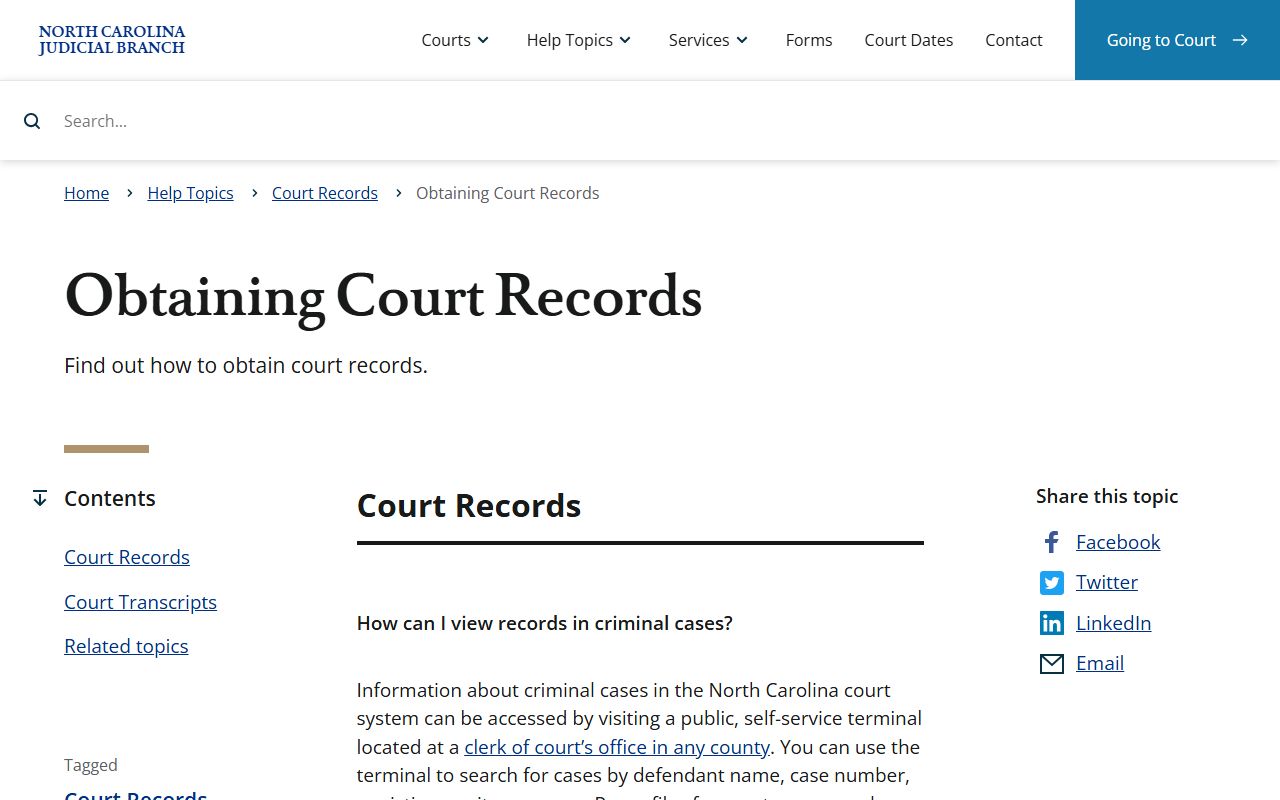
The state obtaining-records source supports the in-person fallback because online case access does not replace clerk file viewing and copy service.
The NC court records help topic gives statewide context for court records, background checks, and expunctions.
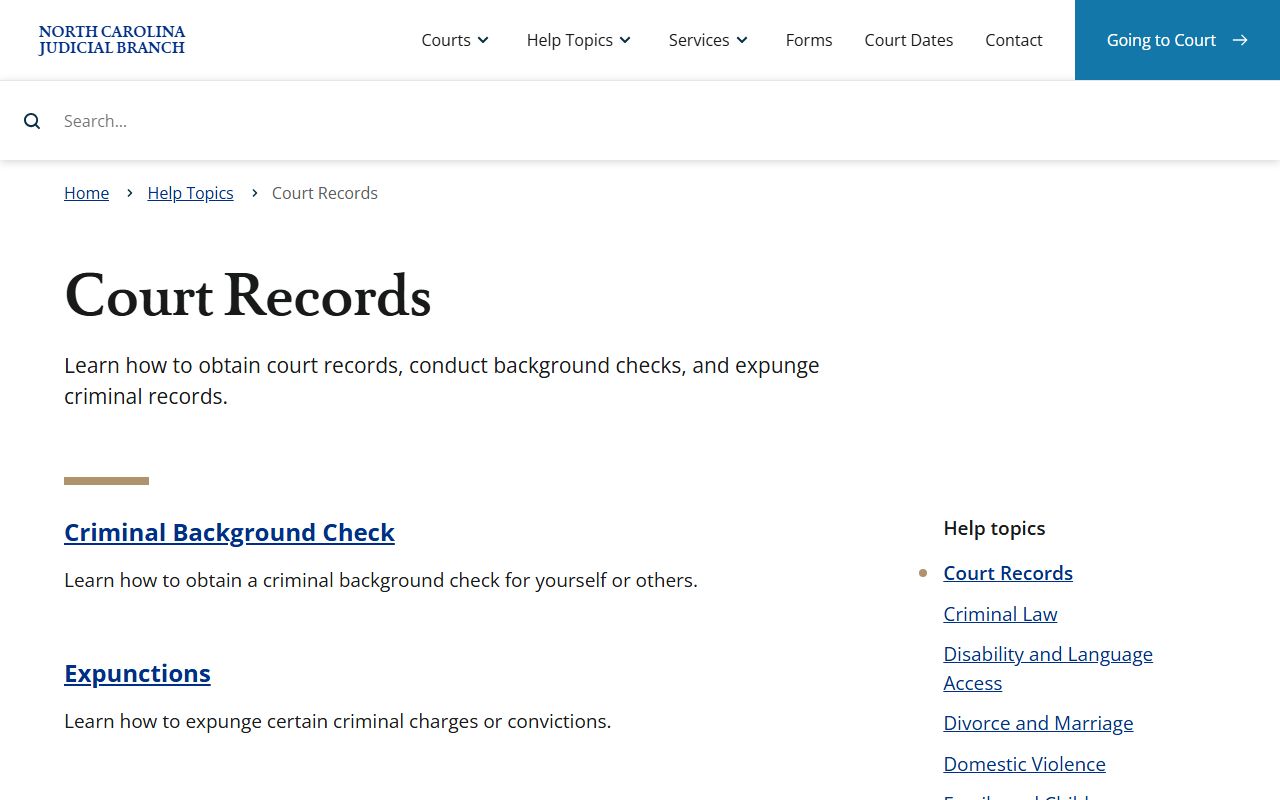
That help topic is useful when a Harnett County court records issue turns on statewide rules rather than a county-only office process.
The Harnett Clerk's Portal page explains how public and registered Portal access work in Harnett County.
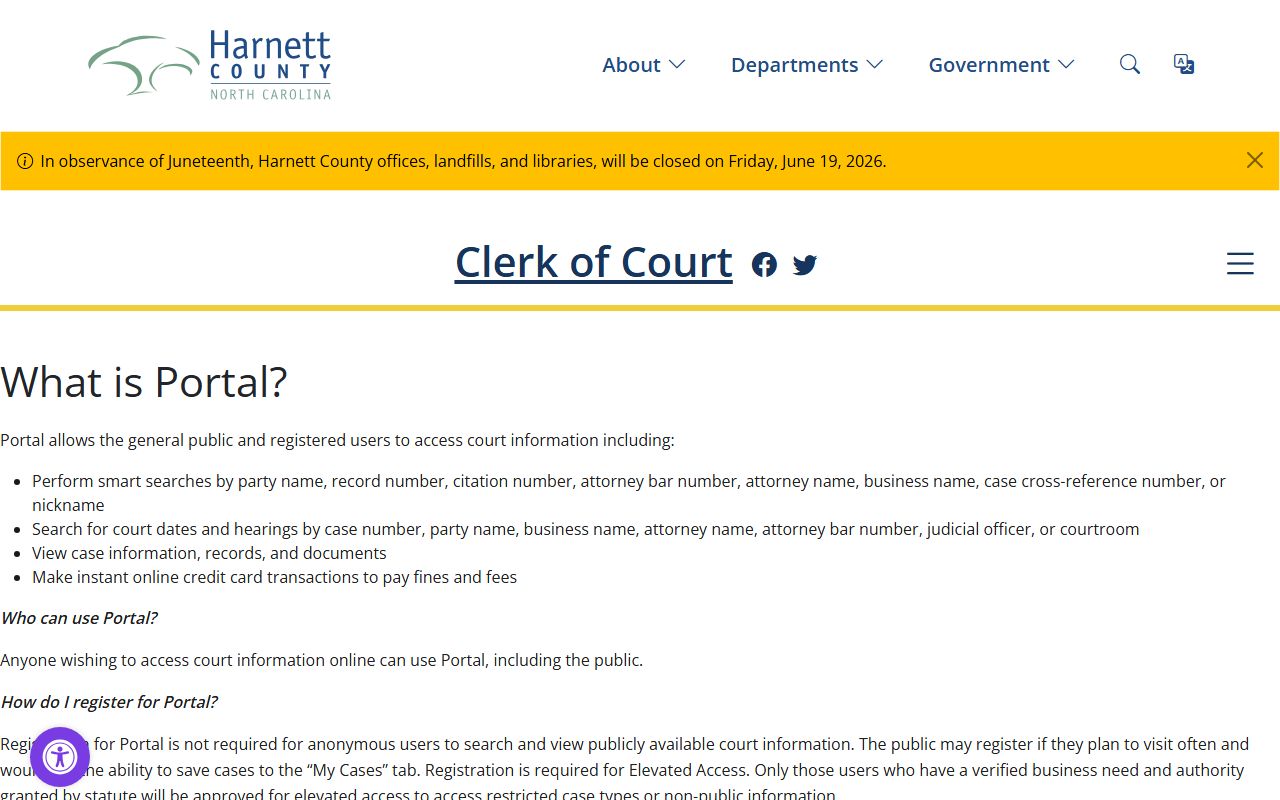
The local Portal explainer is the county-level bridge between the statewide case system and Harnett record searches.
For filings into active Harnett County court records, the official NC eFile and Serve landing page is the filing platform referenced by Harnett eCourts materials.
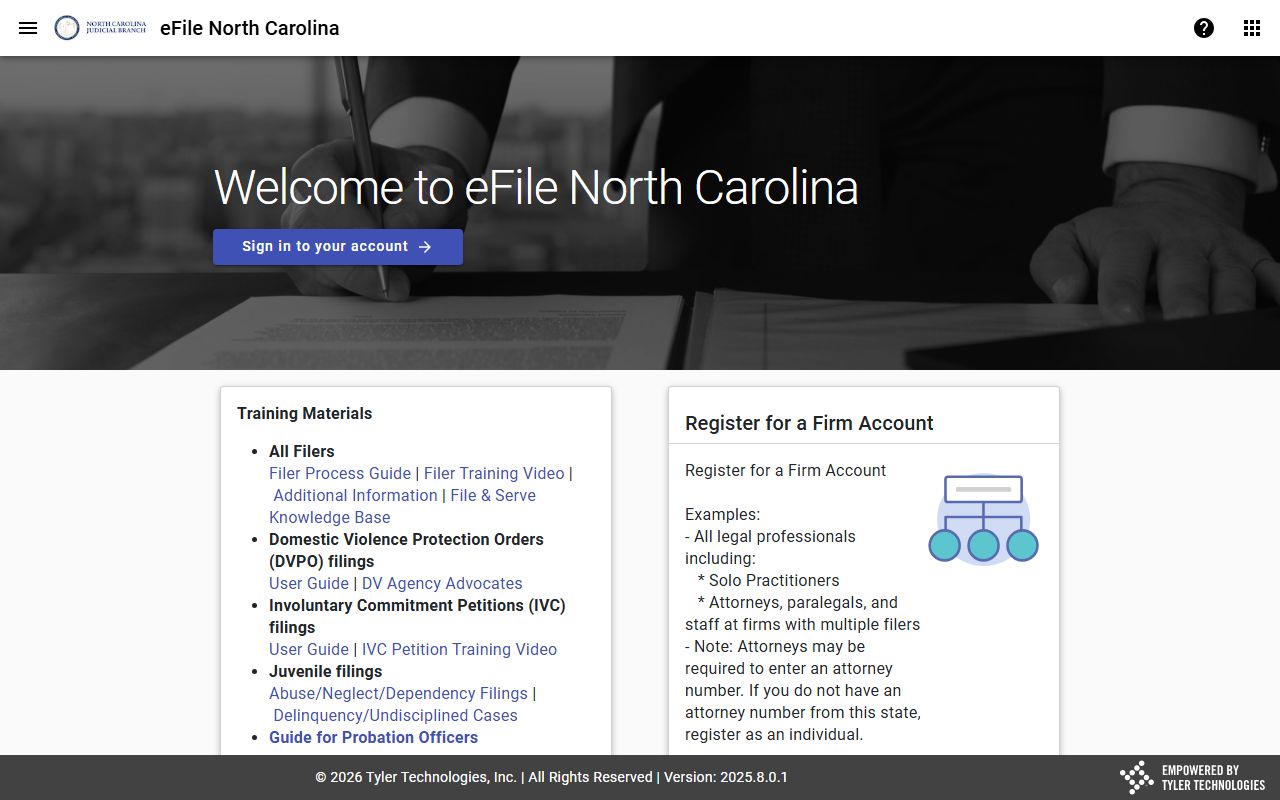
Filing tools matter because Harnett is an eCourts county, but public search, clerk copies, and restricted access rules still remain separate.