
Clerk of Superior Court as Probate Judge
North Carolina does not use a separate county probate court in Harnett County. The Harnett Clerk responsibilities page states that the Clerk of Superior Court is also probate judge, and that the office's core responsibilities include Probate Judge, Record Keeper, Administrator, and Comptroller. That local rule controls how Harnett estates, wills, and many special proceedings are filed and reviewed.
The practical contact is the Estates and Special Proceedings division. The NC Judicial Branch Harnett contact directory lists Estates/Special Proceedings at 910-814-4640, with the Clerk main line at 910-814-4600. The courthouse address for the Clerk is 301 W. Cornelius Harnett Blvd., Suite 100, Lillington, NC 27546. The official courthouse page notes the clerk's office closes for lunch daily from 12:30 p.m. to 1:30 p.m.
The official Harnett estates and wills page is the local source showing that probate work sits with the Clerk.
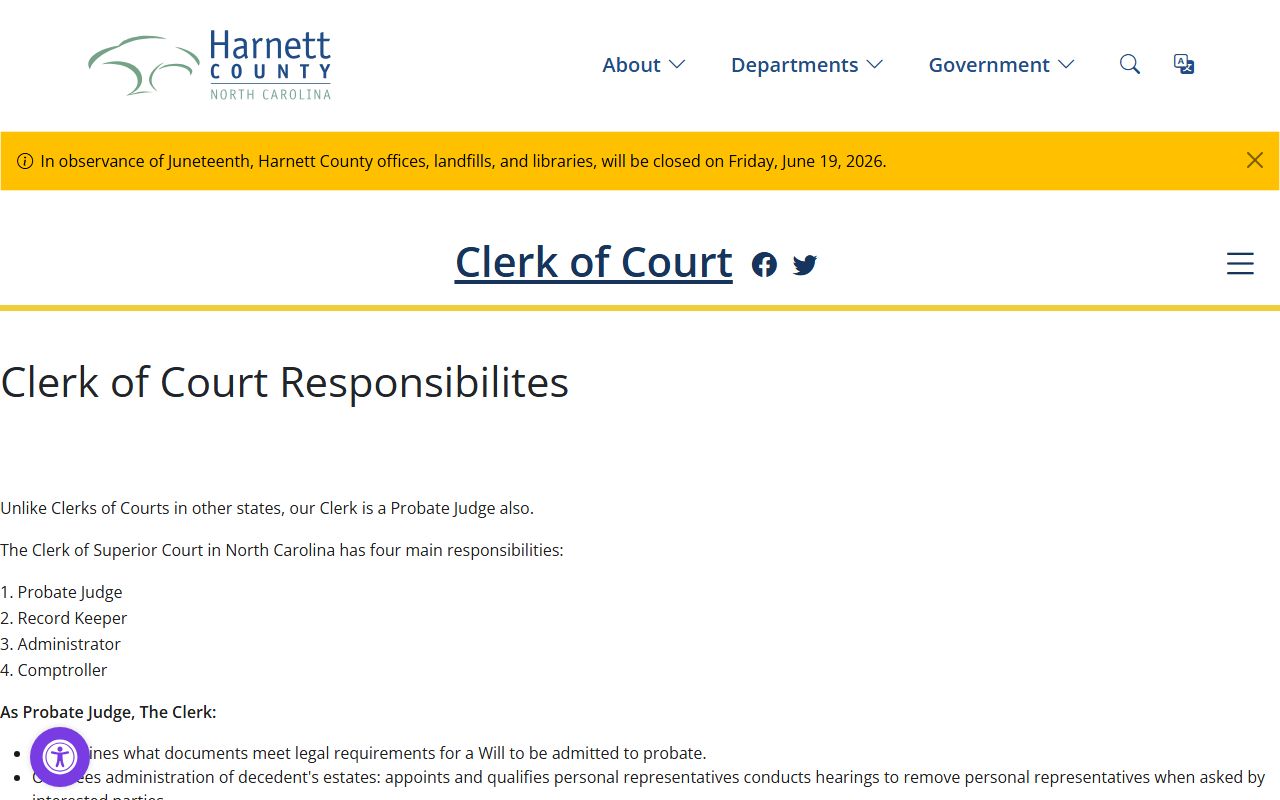
That local office assignment is why probate questions should not be routed to the Register of Deeds, even though the Register handles marriage and vital records nearby.
Probate Terms Defined
Estate files use a mix of court, property, and fiduciary terms. These definitions reflect the records users most often encounter when looking up Harnett probate filings or preparing to ask the Estates office for a file.
- Decedent
- The person who has died and whose estate is being administered.
- Executor
- The person named in a will to carry out estate administration after qualification by the clerk.
- Administrator
- A person appointed to administer an estate when there is no qualifying executor.
- Letters testamentary or letters of administration
- Clerk-issued authority showing who may act for the estate.
- Inventory
- A filed listing of estate assets, used to begin tracking administration.
- Annual or final account
- A report showing estate activity, receipts, disbursements, and final distribution where required.
- Guardianship
- A special proceeding for appointment of a guardian after a legal determination of incapacity or related need.
How to Search Harnett County Probate Records
Start with the North Carolina eCourts Portal for public case information. Use Smart Search by decedent name, party name, or record number, then filter the location to Harnett County. For hearing searches, the Portal's Search Hearings tool includes a "Probate or Mental Health" hearing-type option. Public users can search public information without registration, but restricted documents and elevated-access case types are not available to every user.
- Search Portal by name or record number and set the location filter to Harnett County.
- Use Search Hearings if the question is a scheduled probate, estate, guardianship, or mental-health related hearing.
- If the online record is incomplete, call Estates/Special Proceedings at 910-814-4640.
- Visit the Clerk's office to view the estate file or use a public self-service terminal for estates case information.
- Request copies through clerk staff and expect copy fees when documents are provided.
| Search Field | Type | Use |
|---|---|---|
| Record number or name | Text | Search by estate case number, decedent name, or party name. |
| Filter by Location | Dropdown | Select Harnett County to remove statewide matches. |
| Case Type | Dropdown | Use probate or estate-related types when available in the live Portal. |
| Hearing Type | Dropdown | Choose Probate or Mental Health when searching hearings. |
| File Date Start/End | Date | Helpful when the approximate death date or filing period is known. |
Harnett County Probate Contact Card
Use the Clerk of Superior Court, Estates and Special Proceedings division for estate and probate questions. The Register of Deeds remains separate and should be used for marriage, birth, death, and recorded land instruments, not probate case files.
Clerk of Superior Court, Estates and Special Proceedings
301 W. Cornelius Harnett Blvd., Suite 100
Lillington, NC 27546
Estates/Special Proceedings: 910-814-4640
Clerk main: 910-814-4600
Lunch closure: 12:30 p.m. to 1:30 p.m.
Probate Filing Fees
The research file provides a specific statewide guardianship amount and the general rule that court copies and current court costs depend on case type. For estate filing fees, certified copies, and letters, use the current NC Judicial Branch court-cost charts or confirm with Estates/Special Proceedings before filing.
| Item | Amount |
|---|---|
| Estate or probate filing | Current NC Judicial Branch court-cost chart or Clerk confirmation required |
| Letters testamentary or letters of administration | Confirm with Estates/Special Proceedings |
| Court copies | Fee applies when clerk staff provide copies |
| Guardianship filing fee | $120 |
| Sheriff service fee in guardianship | $30 |
The Decedent's Estate Procedures Pamphlet is the key statewide procedural source for estate administration.
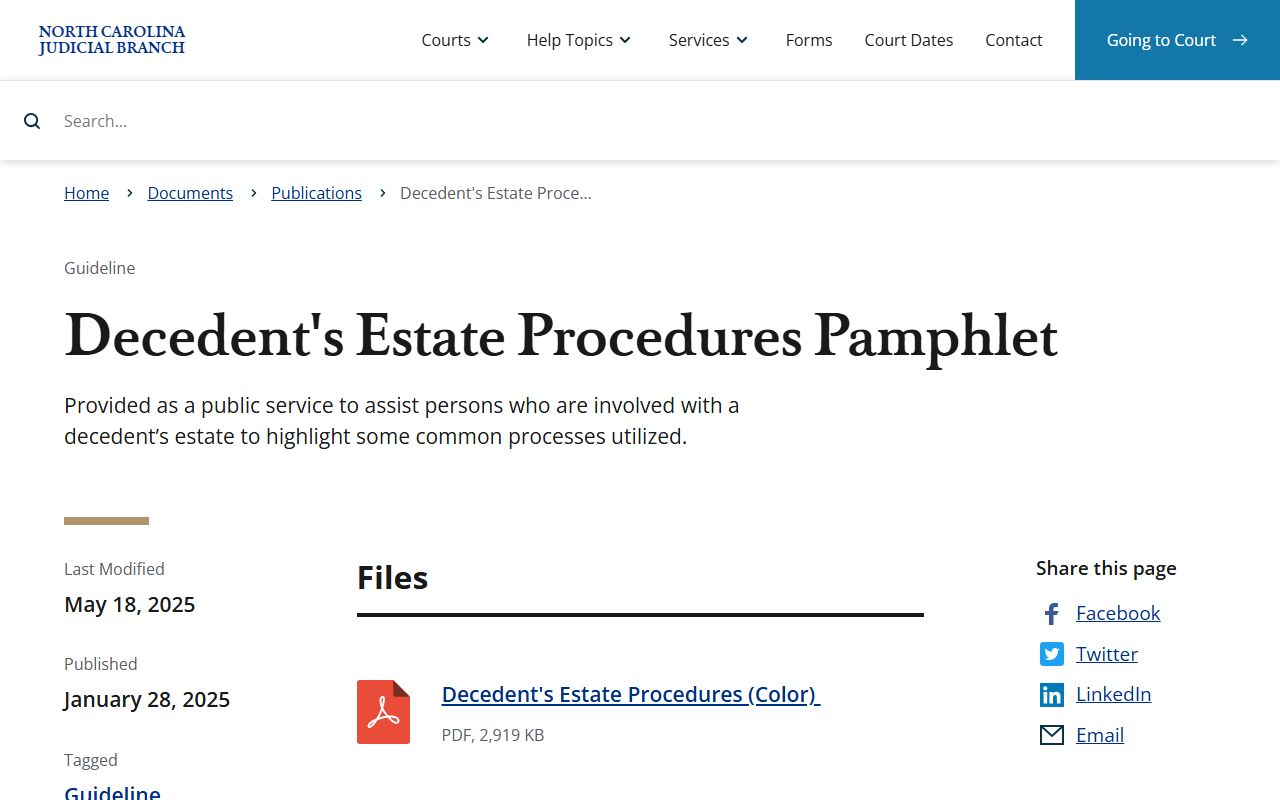
The pamphlet gives statewide process context, while the Harnett Estates office is the local filing and file-access point.
What Harnett County Probate Records Show
Probate and estate files can show the decedent name, estate file number, filing or opening date, applicant, executor, administrator, personal representative, will or codicil filings, probate orders, letters testamentary, letters of administration, inventories, annual accounts, final accounts, notices to creditors, receipts, waivers, renunciations, and clerk orders. Special proceedings may include guardianship, incompetency, foreclosure special proceedings, or related filings when handled through the clerk.
Guardianship is especially important because the clerk handles the proceeding and fees are specifically identified in state guidance. The NC Judicial Branch guardianship page explains the state-level process and fee references.
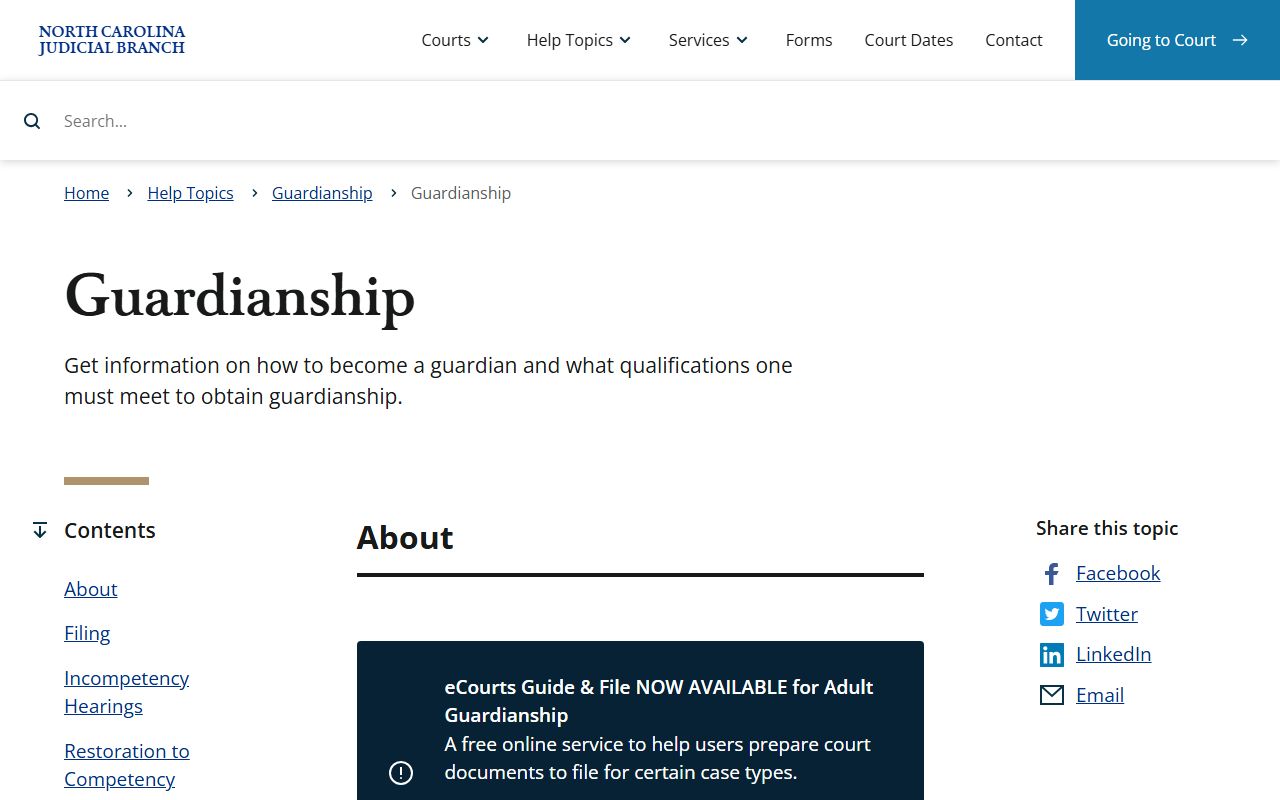
Those guardianship records may be part of the clerk's special-proceedings workload, but public access may be narrower than for ordinary estate administration filings.
Restricted Probate, Guardianship, and Mental Health Details
Not every probate-adjacent matter is fully public. Mental health proceedings are often restricted even though the hearing search interface includes a Probate or Mental Health category. Guardianship and incompetency filings can contain medical, financial, and personal information. Juvenile-related material is governed by confidentiality rules separate from ordinary adult court records, and adoption files are not ordinary public probate records.
The North Carolina Juvenile Code is one statutory source for juvenile confidentiality boundaries.
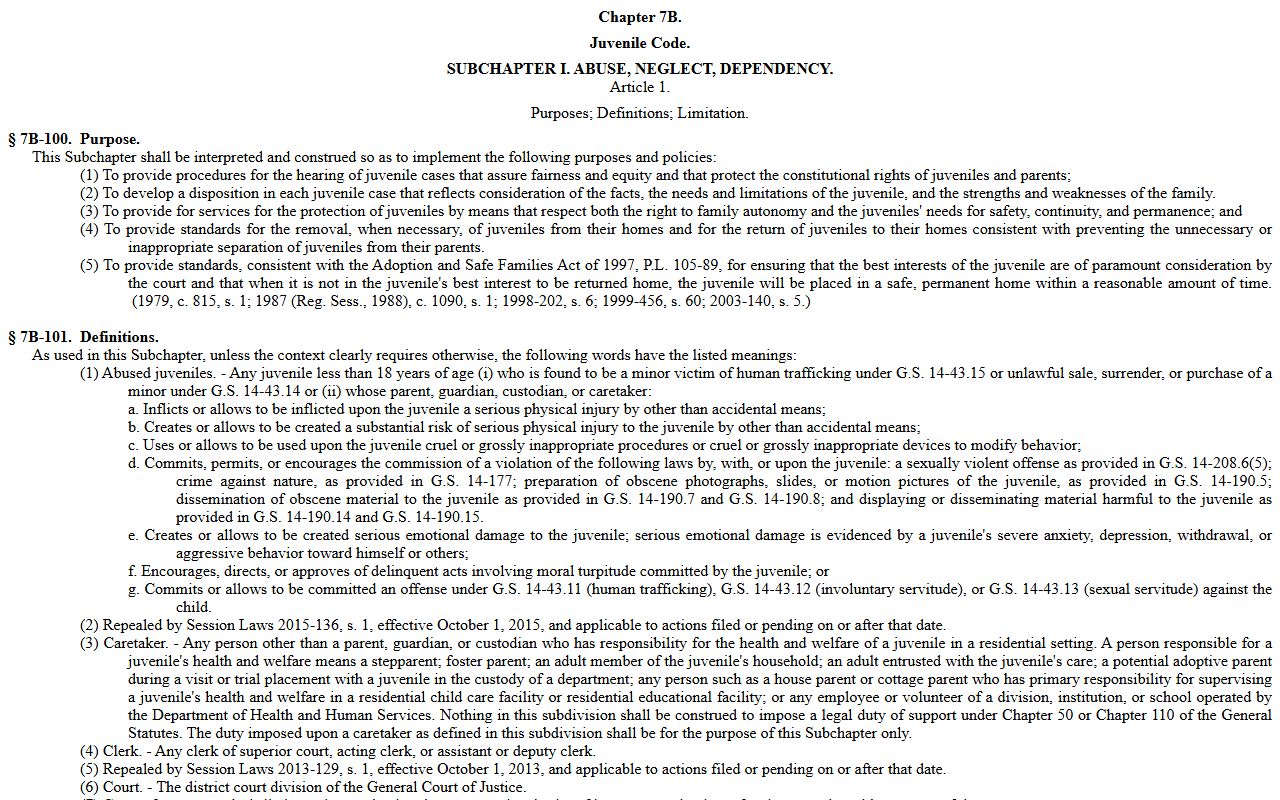
That restriction context helps explain why a Portal search may show limited public case data while withholding documents or party details.
Harnett's Permitium vital-record portal is separate from probate, but it is relevant when a probate user needs certified vital records for an estate.
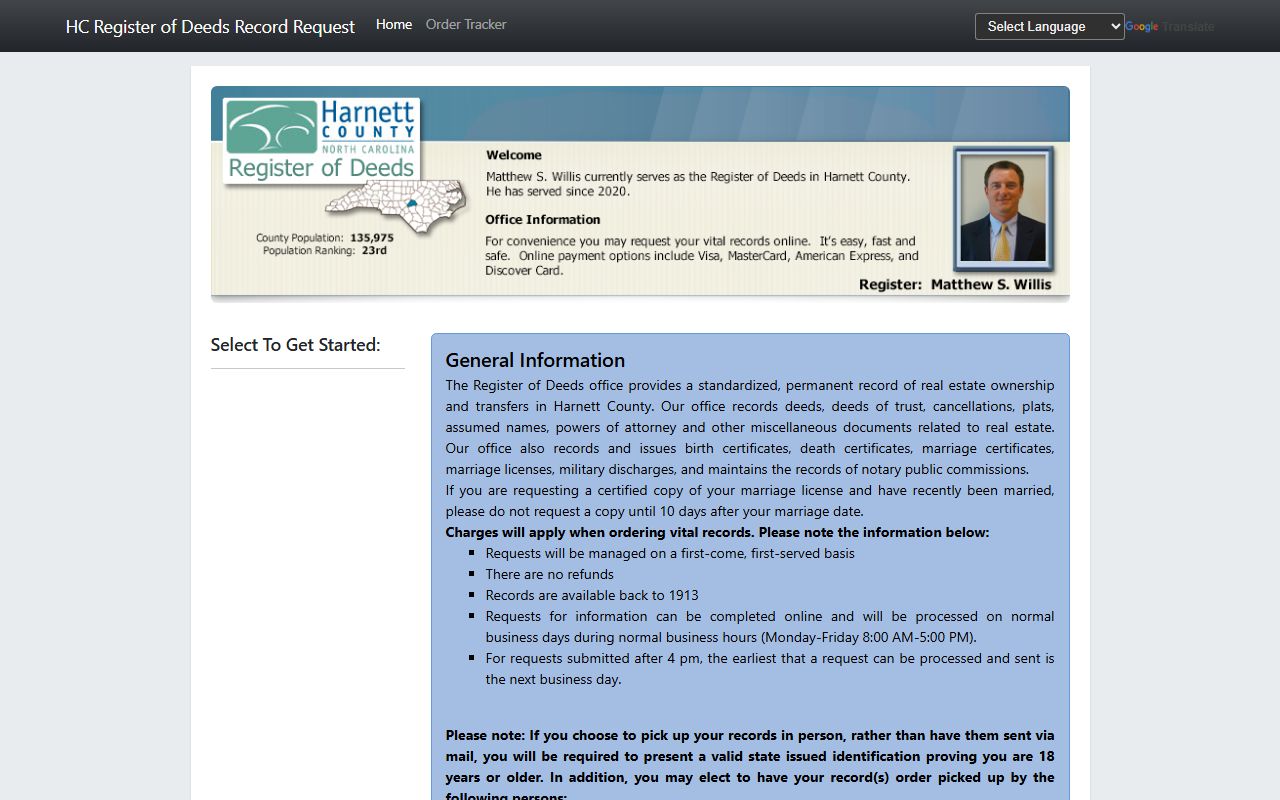
Estate administration often requires proof documents, but certified death, marriage, or birth records come from the vital-record channel rather than the probate case file.
Probate Access Channels in Harnett County
Probate access should follow a fallback chain. First, search Portal by name or record number and filter to Harnett County. Second, check Search Hearings if the question is a scheduled estate, guardianship, special proceeding, or probate-related hearing. Third, call Estates/Special Proceedings at 910-814-4640 if the file is missing online, the case type is unclear, or the record may be older than the searchable digital material.
For in-person work, use the Clerk of Superior Court at 301 W. Cornelius Harnett Blvd., Suite 100 in Lillington. The NC Judicial Branch says civil, special proceeding, and estates case information can be accessed on public self-service terminals in the clerk's office. It also says court files can be viewed by visiting the clerk in the county where the case is located, with copies available for a fee.
For mail or copy correspondence, include the decedent's full name, any estate file number, date of death or approximate filing date, requested document type, and whether the copy must be certified. A request for "probate papers" is less useful than a request for a will, letters testamentary, inventory, annual account, final account, guardianship order, or specific clerk order. If the estate involves a living protected person, a minor, incompetency, or mental health material, expect staff to screen the request for confidentiality before providing access.
Estate administration is not just a document search. The NC Judicial Branch estate guidance explains that a will has no legal effect until it is probated by a court, usually the clerk of superior court. Administration then involves gathering assets, handling claims and creditor notice, filing inventory and accounting paperwork, and distributing property according to the will or law. Those steps are why one Harnett estate file may contain only a few early filings while another includes years of accounts, orders, waivers, receipts, and creditor activity.
Older files and non-digitized material are a normal reason to use the courthouse route. Portal can be useful for case indexing and hearing information, but it should not be treated as the full universe of Harnett probate records. When a decedent name search produces no result, try spelling variations, search by party or personal representative name, narrow by file date only after broad searching, and then call the Estates office before assuming no estate was opened.
For courthouse timing, remember the Clerk lunch closure from 12:30 p.m. to 1:30 p.m. and verify the current office process before traveling with original wills, death certificates, or accountings.