
Harnett County Warrant Search Limits
No official Harnett Sheriff active warrant database or public warrant form was found in the research file. That matters. The sheriff's Wanted Persons page is an official channel, but it is not a full Harnett County warrant search. It asks the public to contact the sheriff if they have information about listed people and links to an external wanted-suspect view.
For court-process questions, use the Harnett Clerk Criminal Division, the Magistrates-Criminal number, or the North Carolina eCourts Portal. For law-enforcement service, surrender, and records questions, use the sheriff's non-emergency line. A public wanted-person entry does not prove every active warrant in Harnett County is posted online, and a missing name does not prove no warrant exists.
The official wanted-person page is the public sheriff source assigned to this Harnett County warrant search topic.
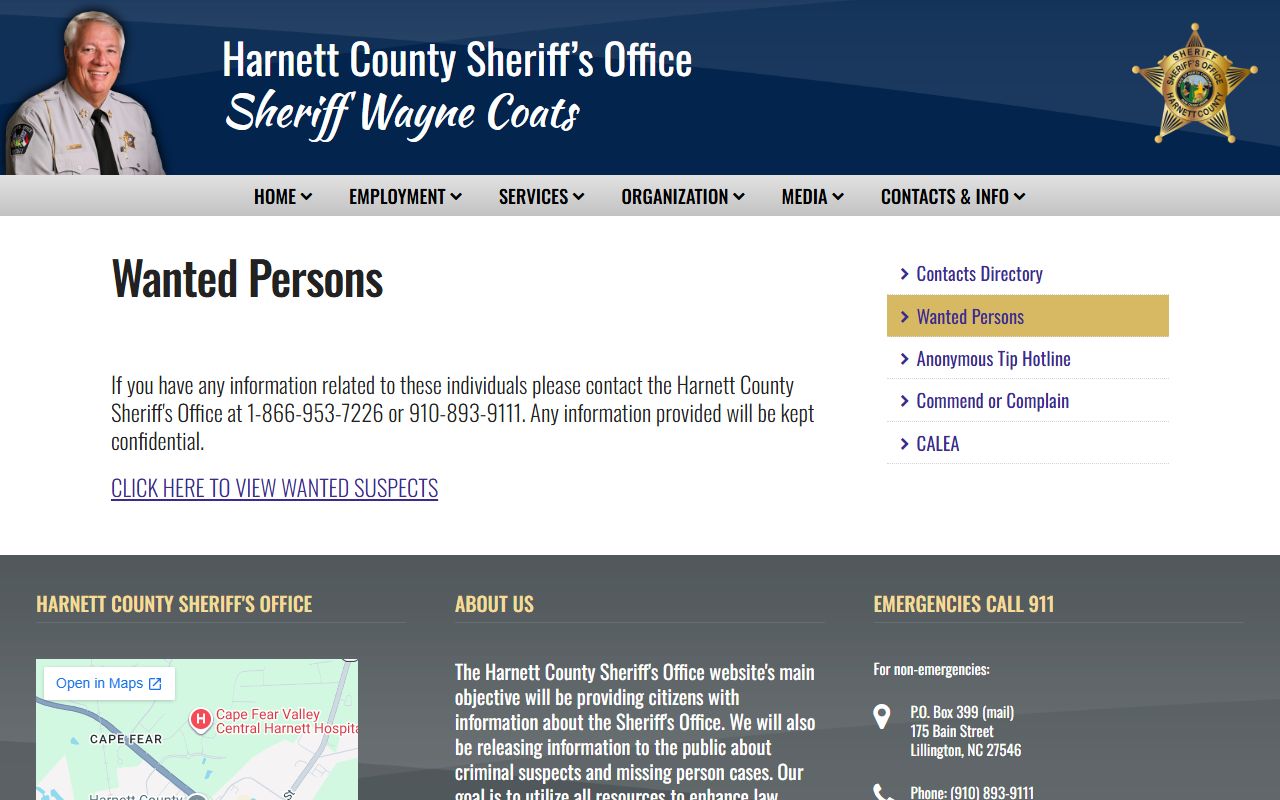
Use that page as a tip and wanted-person channel, then verify any court status through the Clerk, magistrate, Portal, or an attorney.
Harnett County Warrant Channels
A careful Harnett County warrant search uses every official route documented in the research. The county has no single public all-warrants database, so the fallback chain is the main product: sheriff contact for wanted persons and service issues, magistrate contact for criminal process, Clerk contact for court-file status, Portal search for related cases, and emergency or tip lines when public safety is involved.
The sheriff records route is different from the court records route. The Sheriff's Office can address law-enforcement records, service questions, and wanted-person tips, subject to North Carolina criminal-investigation limits. The Clerk and Portal handle the court side once a warrant, summons, charge, missed hearing, or order has become part of a public case file. For a person checking their own status, that split matters because a sheriff call may answer surrender logistics while the Clerk explains the underlying Harnett County case number, court date, or payment issue.
| Channel | Use it for | Contact or source |
|---|---|---|
| Sheriff non-emergency | Law-enforcement warrant questions, surrender logistics, wanted-person information. | 910-893-9111 |
| Wanted persons line | Information about listed wanted persons. | 1-866-953-7226 or 910-893-9111 |
| Anonymous tip line | Tips when the caller wants a confidential route. | 910-893-0300 or P3 Tips |
| Magistrates-Criminal | Questions about criminal process, warrants, and first-appearance type issues. | 910-893-0242 |
| Clerk Criminal Division | Related court cases, missed dates, returned warrants, criminal summonses, and case records. | 910-814-4588 |
| NC eCourts Portal | Public cases, charges, hearings, and filed court process when available. | Portal dashboard |
Types of Harnett County Warrants
North Carolina warrant and criminal-process terms are not all the same. Some authorize arrest. Some authorize a search. Some direct a person to appear without immediate custody. Some are issued after a missed court date or a failure to comply with a court order. The public route depends on the kind of process and whether it has been returned to court.
- Arrest warrant - authorizes law enforcement to arrest a person based on probable cause.
- Search warrant - authorizes a search of a person, place, vehicle, or property, often with public access after return unless sealed.
- Bench warrant or order for arrest - commonly follows failure to appear, probation violations, or contempt-type court issues.
- Criminal summons - directs a person to court without the same immediate arrest function as an arrest warrant.
- Fugitive or extradition process - can involve out-of-state warrants and law-enforcement coordination.
Harnett traffic and criminal cases can produce missed-court consequences. A traffic failure to appear may also lead to DMV effects, added costs, or an order for arrest depending on the offense and case status.
Civil process can also create confusion. Child-support enforcement, contempt, show-cause orders, and other civil matters may involve court commands or custody risk without appearing in a criminal warrant search. Those files should be checked through the Harnett County Clerk of Superior Court, Portal, or an attorney rather than through a wanted-person page. If the issue began with a citation, charge, or hearing notice, the related Harnett County court record is often the best starting point for finding the next action.
How to Search Harnett County Warrants
Start with official sources and avoid third-party warrant sites. A private site may copy stale data, miss sealed or restricted material, or confuse a charge with an active warrant. The public Harnett channels work best when a person knows the name, approximate court date, charge, citation, case number, or agency involved.
- Search Portal Smart Search by name or record number with Harnett County selected as the location.
- Use Portal Search Hearings to look for missed criminal or traffic settings that may explain an order for arrest.
- Call the Clerk Criminal Division at 910-814-4588 for court-file and criminal-case questions.
- Call Magistrates-Criminal at 910-893-0242 for criminal-process questions.
- Call the sheriff at 910-893-9111 for law-enforcement warrant or surrender questions. Use 911 only for emergencies.
- For wanted-person tips, use the wanted-person line or anonymous tip route instead of confronting anyone.
The Harnett Sheriff's anonymous tip channel is a separate source from court lookup. The Anonymous Tip Hotline page identifies 910-893-0300 and the P3 Tips route.
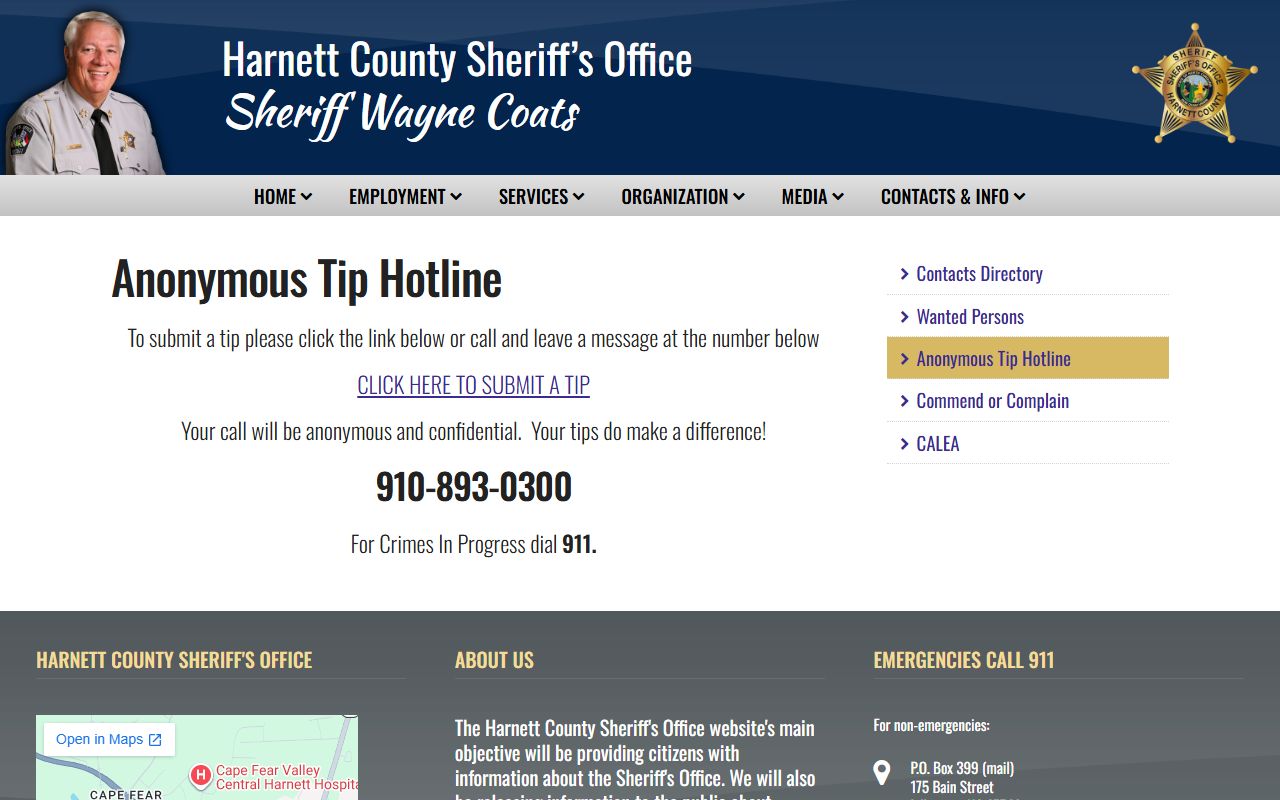
Tip channels are for public-safety information, not for clearing a person's own court process.
Harnett Warrant Search Fields
The research did not locate an official Harnett active-warrant search form, so there are no county warrant form fields to render. The closest official online search fields come from Portal, which can reveal related public criminal cases, returned process, charges, and hearings. The table below documents the practical search fields available through official channels rather than inventing a nonexistent warrant database.
| Field or route | Type | Required | Notes |
|---|---|---|---|
| Portal record number | Text | One search field required | Use if the case, citation, or record number is known. |
| Party name | Text | Alternative | Use last, first middle suffix format; wildcard rules may help with spelling. |
| Location | Dropdown | Recommended | Select Harnett County to avoid statewide results. |
| Hearing search | Portal screen | Conditional | Search by party, case number, attorney, judicial officer, or courtroom. |
| Phone verification | Call | Often needed | Use Clerk, magistrate, sheriff, or attorney when online results are unclear. |
Note: No official Harnett warrant app or mobile warrant lookup was found in the research sweep.
What Harnett Warrant Records Show
Because no comprehensive public Harnett warrant database was found, public fields vary by source. A wanted-person notice may show a name and law-enforcement contact route. A returned warrant in a court file may show case number, process type, issue or return information, charge, officer, agency, and court. A Portal case may show the related criminal charge, hearing, file number, disposition, or judgment if the data is public.
| Field | What it may show |
|---|---|
| Name | Person tied to the wanted notice, case, summons, or returned process. |
| Case or file number | The court identifier needed for Clerk or Portal follow-up. |
| Process type | Arrest warrant, search warrant, order for arrest, criminal summons, or other process. |
| Charge or offense | The offense text connected to the court record or wanted entry. |
| Agency or officer | The complainant, officer, or law-enforcement agency when public. |
| Return or disposition | Whether the process was returned, tied to a hearing, or resolved through the court file. |
Resolve a Harnett County Warrant
If a warrant or order for arrest may exist, use the court and law-enforcement channels before traveling to a courthouse or jail. A licensed attorney can check the court file, help interpret the charge or missed-date issue, and advise on surrender, bond, and recall steps. The sheriff can answer law-enforcement process questions, but the underlying case usually must be handled through the court.
Resolving the warrant is not the same as erasing the court case. A person may need to appear before a magistrate, post bond, set a new court date, pay costs, satisfy a probation condition, or ask the court to recall an order. If the warrant came from a missed Harnett County traffic or criminal date, the court file should be checked again after any surrender or payment to confirm the status changed. Keep receipts, case numbers, and written court notices because phone confirmation alone may not be enough for a later clerk or DMV question.
Important: Get legal advice before surrendering on a warrant, especially if the charge, bond, or court date is unclear.
The sheriff's courthouse information source links court-related subjects such as criminal records checks, traffic citations, Disposition Court, jury duty, court costs, and court dates.
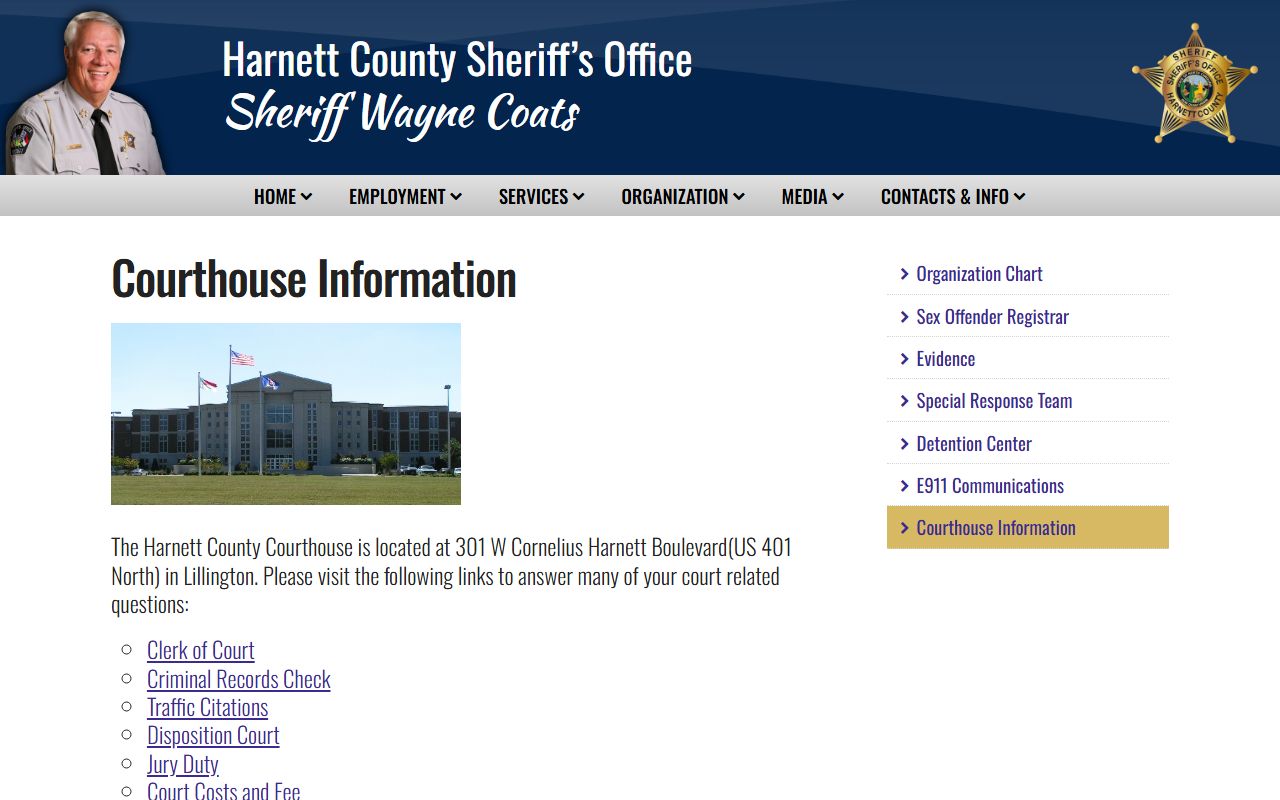
Those courthouse links help connect a warrant problem to the case, payment, or missed-court issue that caused it.
Restricted Harnett County Warrants
North Carolina law separates public court records from criminal investigation records. Under G.S. 132-1.4, criminal investigation records have special rules, but returned arrest warrants, search warrants, indictments, criminal summonses, and nontestimonial identification orders are public court records unless sealed. That rule is central to Harnett County warrant records because active, unserved, sealed, juvenile, or investigative material may not be posted online.
Federal warrants, out-of-state fugitive matters, juvenile processes, sealed search warrants, and open-investigation materials may require a different agency or may be withheld from public access. A Portal result should be read as a public court record snapshot, not a guarantee that all law-enforcement process is shown.
The Chapter 132 criminal-investigation source documents the public-record boundary for returned warrants and sealed material.
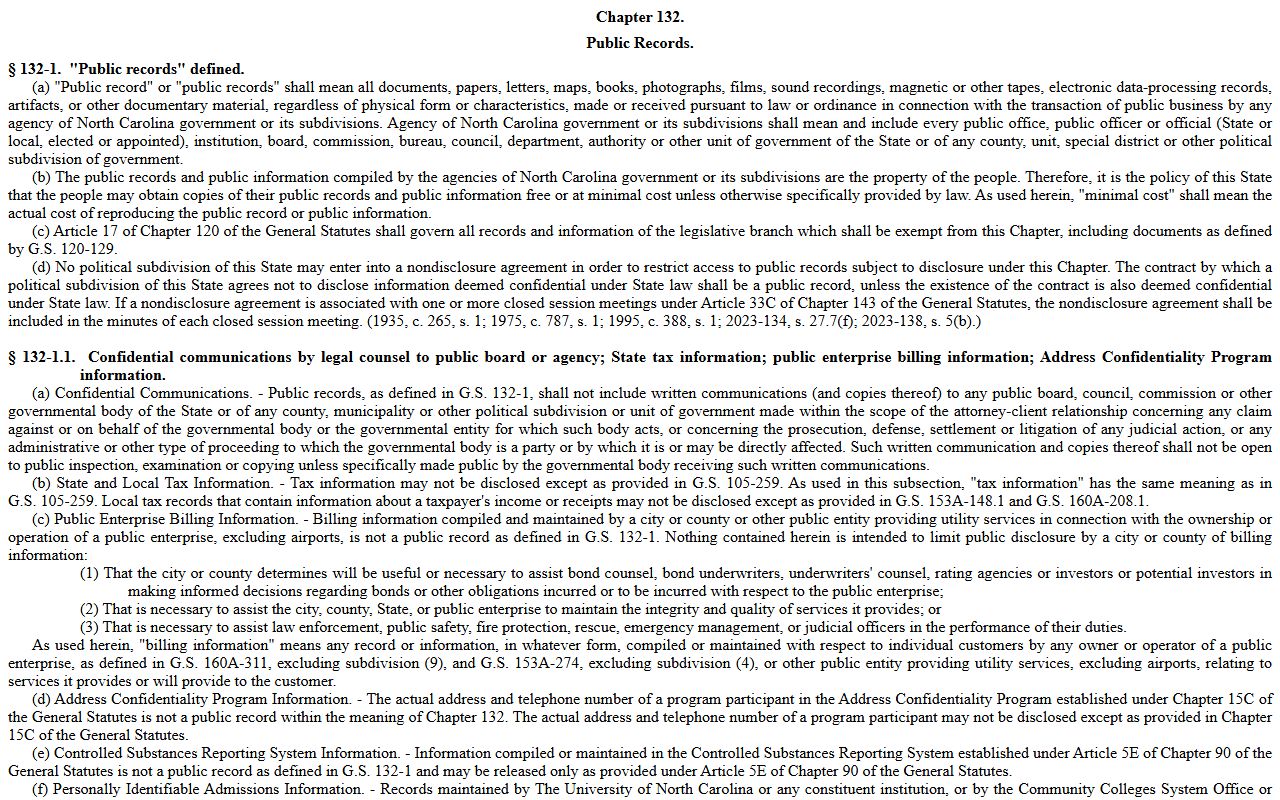
When a warrant record is restricted, the practical route is the Clerk, magistrate, sheriff, or a lawyer with authority to inquire.